The Role of Soldering in PCB Board Assembly Manufacturing
Soldering in PCB Board Assembly Manufacturing
As technology evolves at an incredible rate, pcb board assembly manufacturing plays a key role in the production of consumer electronics. From smartphones and tablets to electric vehicles and charging stations, PCBs are the foundation of many advanced technological applications and can adapt to meet a wide range of requirements. To ensure these sophisticated devices function properly, they need to be soldered and connected to external components. As a result, soldering is a key process in printed circuit board (PCB) manufacturing that requires specialized skills and precision to achieve.
PCBs are made of layers of copper that connect to each other via metal contacts. During the assembling process, a molten alloy called solder is used to make electrical connections between these metal contacts. It’s a soft alloy that fuses to form a eutectic with the adjacent metals when it’s heated, forming strong and secure bonds. The type of solder used in a PCB depends on its core material, metallic constituents, and types of soldering flux.
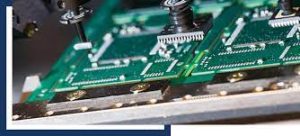
To begin the assembling process, each component is inserted into its designated place on the PCB. This step is crucial to ensuring proper connections, and can be accomplished through manual or automated methods. Automated pick-and-place machines allow for rapid and accurate component placement, reducing human error and increasing efficiency while providing greater consistency.
After the component is placed, it’s inspected and any errors are corrected through a rectification process. Once this step is completed, the PCB undergoes reflow soldering in a reflow oven, which heats up to a preheated zone and then moves to an oven where it reaches a peak temperature of around 250 degrees Celsius. This high temperature melts the solder paste that was applied to the component pads, resulting in a complete and secure connection.
The Role of Soldering in PCB Board Assembly Manufacturing
While reflow soldering is the most common method for PCB assembly, other methods exist. Wave and selective soldering are both common alternatives, but each has its own unique benefits and challenges. Wave soldering is more complex and time-consuming, while reflow offers more control over the temperature profile of the PCB and is more suitable for higher volume production.
Once the soldering process is complete, the PCB is plated with a conformal coating to protect it against chemicals, moisture, dust, and extreme temperatures. It’s also subjected to rigorous visual inspection and automated testing procedures, which verifies the correctness of the components and their connections. Touch-up soldering is performed to address any minor issues, if necessary. Finally, the assembled PCB is cleaned to remove any excess residues or contaminants.
By following these essential steps, a high-quality PCB is produced with precise and reliable connections that will work under the harshest conditions. Ongoing technological innovations continue to shape the landscape of PCB assembly, driving advancements in efficiency, precision, and environmental responsibility. Keeping up with these advances is vital for manufacturers who want to stay ahead of the competition. For example, recent developments include automated systems for component placement, advanced reflow soldering techniques, and lead-free options that align with industry standards.