What is adversarial emulation in cybersecurity testing?
Cybersecurity programs often focus on identifying technical flaws, but modern threats involve far more than vulnerable software. adversarial emulation is a testing approach that recreates the behaviour, methods, and decision-making patterns of real attackers to evaluate how an organisation responds during an active compromise. Instead of simply proving a weakness exists, this method measures whether employees, security teams, and monitoring tools can detect and stop realistic attack activity before damage occurs across critical business operations.
How It Differs from Traditional Penetration Testing
A standard penetration test usually concentrates on discovering and exploiting weaknesses inside a specific network, application, or system. While valuable, that process mainly validates technical exposure. adversarial emulation expands the scope by simulating complete attack scenarios inspired by actual cybercriminal groups or advanced persistent threats. These exercises assess detection accuracy, communication speed, escalation procedures, and operational resilience. The objective is to understand how effectively an organisation can withstand coordinated attacks involving people, processes, and defensive technologies simultaneously.
Realistic Threat Simulation in Modern Security
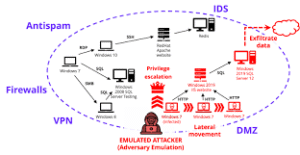
Modern attackers rarely rely on a single exploit. They combine phishing, credential theft, lateral movement, privilege escalation, and stealth techniques to avoid detection for extended periods. adversarial emulation mirrors these tactics in controlled conditions to reveal weaknesses that automated scanners may never uncover. Security teams gain visibility into how attackers move through systems and how defenders react under pressure. This produces practical evidence about incident readiness rather than generating only a technical vulnerability report for compliance purposes.
Measuring Human and Organisational Response
One major advantage of this testing style is its focus on human behaviour during cyber incidents. Employees may unknowingly interact with malicious emails, while defenders might overlook suspicious activity due to alert fatigue or process gaps. By recreating realistic attack chains, organisations can observe whether internal communication, escalation paths, and response workflows function correctly. These insights help improve coordination between technical teams and leadership. Businesses looking for advanced assessment strategies often explore resources available through swarmnetics.com to understand these operational testing approaches.
Key Components of an Effective Engagement
A successful adversarial emulation exercise typically begins with threat intelligence research. Security professionals identify attacker groups or techniques most relevant to the organisation’s industry and risk profile. The engagement may then simulate covert intrusions, targeted phishing campaigns, or attack-and-defend scenarios that challenge blue teams in real time. Throughout the exercise, testers document detection rates, response timelines, and defensive effectiveness. The final analysis provides a realistic picture of organisational preparedness against modern cyber threats rather than focusing solely on exposed systems.
Why Businesses Are Investing in This Approach
Cyberattacks are becoming increasingly sophisticated, making preventive security controls alone insufficient. Organisations now require validation that their monitoring systems, employees, and incident response procedures can perform effectively during genuine threats. adversarial emulation helps companies identify blind spots before criminals exploit them in production environments. It also strengthens executive confidence by demonstrating whether security investments deliver measurable defensive outcomes. Businesses operating in highly regulated or high-risk sectors especially benefit from this deeper evaluation of resilience and operational readiness against evolving attacker behaviour.
The Long-Term Value of Continuous Testing
Security maturity improves when organisations regularly test their readiness against evolving threats. Continuous adversarial exercises help teams adapt to changing attacker techniques and refine response capabilities over time. Rather than treating cybersecurity as a one-time assessment, companies can build a culture of preparedness through repeated simulations and lessons learned. This ongoing strategy enhances detection accuracy, strengthens collaboration across departments, and improves recovery planning. In today’s threat landscape, realistic security testing has become essential for maintaining trust, resilience, and long-term operational stability.