How to Repair a Damaged Flexible PCB
Repair a Damaged Flexible PCB
Despite their flexibility, PCBs aren’t immune to damage. A physical shock, a component failure or simply the passage of time can cause a pcb to develop defects. These defects may be minor and innocuous, or they could lead to an entire system failure. Fortunately, the vast majority of these issues can be resolved through a professional repair service. However, if the problem is severe enough, the circuit board may need to be completely disassembled and rebuilt. This process is known as remanufacturing, and it requires specialized tools.
Using a magnifying glass or microscope, carefully inspect the board for damaged areas. Once the problem is identified, a conductive epoxy can be applied to the affected area. Once cured, the electrical continuity will be restored. This will prevent further damage and allow the circuit board to function normally.
Another common issue is corrosion. Corrosion can degrade the conductive traces on a flexible pcb, causing intermittent or complete circuit failure. To prevent corrosion, the conductive traces should be cleaned regularly with isopropyl alcohol or a similar solvent. In addition, a protective coating can be applied to shield the traces from moisture.
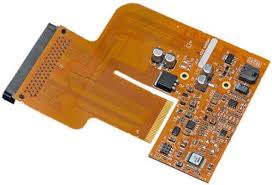
How to Repair a Damaged Flexible PCB
The most common problems encountered with flex circuits are ripped or cut traces, heat damaged/lifted pads and faulty conductors. These can be fixed by adding in replacement Kapton(tm) material or putting the pads and conductors back into position and epoxiing them.
Rigid-flex circuits can also experience delamination, which is when the layers of the insulating layer separate. This can be caused by thermal stress, mechanical strain or even a chemical reaction. Fortunately, this can be repaired by carefully applying an adhesive solution to the affected area and re-soldering the connection.
When repairing a rigid-flex PCB, it is important to ensure that the correct size and shape of the replacement part is used. The replacement part should also be precisely aligned with the original, so that all connections are solid. Finally, a multimeter should be used to test the integrity of the repair.
Rigid-flex PCBs are highly sensitive to temperature and humidity, so it’s critical that they are properly stored and protected. Additionally, it is important to use a high-quality soldering station and quality flux to avoid damaging the delicate electronics. A desoldering station can also be useful in removing excess solder from the PCB. Regardless of the type of remanufacturing method used, it is important that the board is tested to ensure that it functions as intended.
Performing this testing can help to identify any other areas that require attention before the next remanufacturing cycle. With proper maintenance and regular inspections, a flexible pcb can last a long time. However, it is crucial to understand the signs of damage and how to properly repair them so that the pcb can be returned to full functionality. To ensure this, it is best to work with a professional remanufacturing company. They can provide expert advice and help you keep your devices running smoothly for a longer period of time.