Can a Circuit Board Be Used For Audio Equipment?
Circuit Board
A circuit board is a thin sheet of conductive material that connects electronic components. It can be used in a wide range of electronic devices, from simple calculators to complex computers. The most important part of a circuit board is the copper layer, which transmits electric current from one component to another. In addition to the copper, a circuit board circuit board also contains other components that provide essential functions. These include resistors, capacitors, and diodes.
Resistors are small, cylindrical electronic components that transfer electrical energy through resistance. They have two leads and are color-coded to indicate their resistance value. Choosing the right resistor value can improve a PCB’s performance and reduce costs.
Capacitors are small, circular electronic components that store and release electrical energy in a circuit. They are commonly found in audio equipment because they can be used to filter DC and AC signals. They are also useful for preventing DC voltage spikes and reducing signal interference. Capacitors are available in a variety of sizes and tolerances, so you should carefully choose the best ones for your audio design.
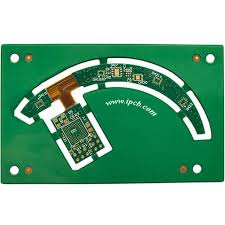
Can a Circuit Board Be Used For Audio Equipment?
Diodes are important in the circuit board because they allow electric current to flow in only one direction. This can prevent damage to the board and its components. Moreover, they can help protect the circuit board from overheating. Overheating can occur due to high current, poor ventilation, and faulty components.
The PCB consists of a base, or substrate, and a conductive layer laminated to it. The conductive layer can be made of single- or double-sided copper. It can also be multilayer, which includes three or more layers of conductive material separated by insulating layers. Multilayer PCBs are the most advanced and can support a large number of complex components.
PCBs for audio equipment must be designed to achieve high-quality sound. The first step in this process is defining requirements, such as the frequency range, dynamic range, and distortion limits. This will help you create detailed schematics for amplifiers, converters, and processors. You must also select components with low noise and high linearity to achieve optimum performance.
Other important factors for achieving high-quality audio in a circuit board include designing a clean ground plane, maintaining controlled impedances, separating noisy digital and analog circuits, and using proper decoupling techniques near ICs. Careful circuit board layout can also minimize noise coupling into sensitive analog areas. For example, keeping traces short and avoiding 90deg angles can reduce signal reflections and cross-talk. You should also use rounded traces, avoid sharp corners, and route circuits in an area that’s not prone to cross-talk hot spots.
Finally, you must ensure that the circuit board has a robust power supply and is properly shielded to prevent EMI and RFI emissions. You can do this by performing susceptibility simulations, scanning with near field probes, or testing in an anechoic chamber. You should also use a power supply with a lower noise output, and use power-factor correction (PFC) to stabilize the output.