How to Select a Flex PCB Manufacturer
Select a Flex PCB Manufacturer
Whether you’re designing a new wearable device for your business or prototyping a new electronic product, you need a reliable and competent flex PCB manufacturer. The right partner will optimize your design and help bring your innovative product to market quickly and effectively. Finding the right supplier requires rigorous vetting across various factors, including technical capabilities, quality systems, materials expertise, and production capacity. It’s also important to choose a company with open communications and alignment on goals early on, which will set the tone for the rest of the relationship.
The first step in selecting a flex circuit manufacturer is to pen down your requirements. This will include fabrication facilities, minimum order size, desired turnaround time, and additional services like custom packaging. After defining your requirements, start searching for potential partners via online research, trade shows and exhibitions, directories, listing platforms, etc. Once you’ve shortlisted a few options, make sure to evaluate their past client reviews and product samples. Also, visit their facility to directly observe their manufacturing processes, quality systems, and testing procedures.
A reputable flex pcb manufacturer will provide high-quality products and offer excellent customer service. They will adhere to industry rules and standards and always deliver on time. They will also use quality materials and ensure that their prices are fair.
How to Select a Flex PCB Manufacturer
Choosing the right flex pcb material will play a crucial role in the final outcome of your project. Generally, there are three types of base raw material for flexible circuits: Polyyester(PET), Adhesive-Polymide (PI), and Adhesiveless Polymide (PI). Each has different properties that influence the design and construction of a flex circuit board.
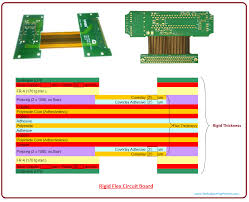
Another important factor to consider is the thickness of your flex PCB. A thicker PCB will provide more stability, while a thinner PCB is more flexible. Depending on your specific needs, you can also use a flex circuit board with different layers or copper weights.
To achieve the best results, a good flex PCB manufacturer will use the right tooling for the job. For example, for high-volume production, they’ll use a hydraulic punch and die set to cut out the boards. For prototypes and low-volume runs, a blanking knife is used instead. This is a long razor blade bent into the outline of your flex circuit design, which is pressed into a routed slot in a blank backing board (MDF, plywood, or Teflon).
The process of manufacturing Flex PCBs involves several intricate steps, each requiring precision and expertise. It starts with the selection of appropriate materials, which must offer both flexibility and durability. Polyimide, for example, is a popular choice due to its high thermal stability and excellent mechanical properties. Once the material is chosen, the manufacturing process involves creating the circuit patterns using methods such as photolithography or direct imaging. These patterns are then etched onto the flexible substrate, forming the electrical pathways that will connect various components in the final device.
Another option to consider is shielding for your flex PCB. This will protect against electromagnetic interference, which can affect the performance of electronics. It’s also possible to add FR4 or metal stiffeners for select areas in the circuit, which will give it added mechanical strength.